
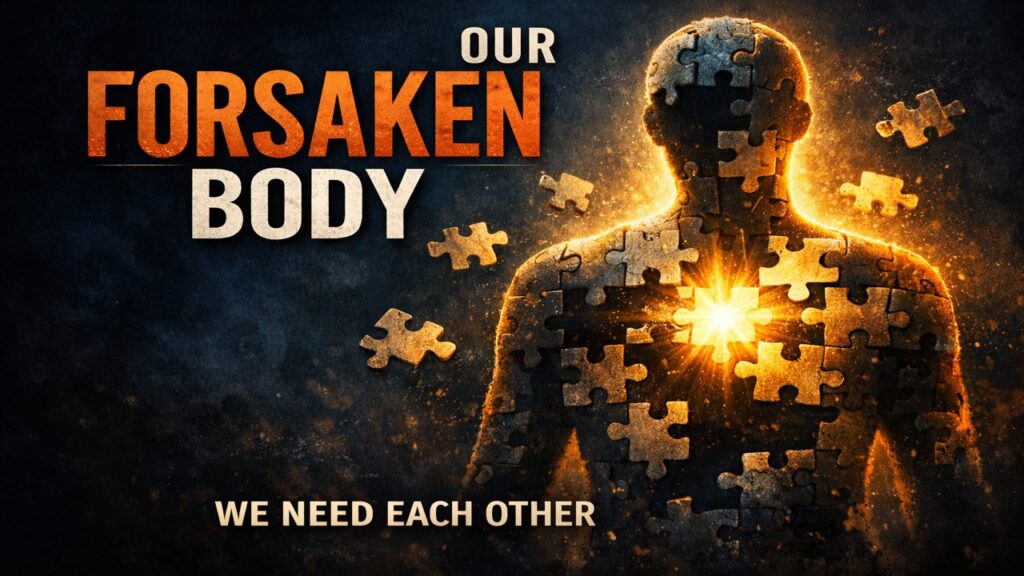
There’s a sobering reality woven throughout Scripture that we often overlook: the health of the church depends not just on its leaders, but on every single member growing toward spiritual maturity. When one part of the body suffers, we all suffer. When one member thrives, we all benefit. This interconnectedness isn’t just a nice theological concept—it’s the practical foundation of how the body of Christ is meant to function.
The Ripple Effect of Our Conduct
Paul’s instruction to Timothy in 1 Timothy 4:16 captures this beautifully: “Take heed unto thyself, and unto the doctrine; continue in them: for in doing this thou shalt both save thyself, and them that hear thee.” Notice the dual responsibility—both personal conduct and sound doctrine matter. Timothy’s faithfulness would have a ripple effect, impacting not only his own spiritual journey but also everyone who heard him.
This principle extends far beyond pastoral ministry. Every choice we make, every behavior we exhibit, affects the broader community of faith. There is no such thing as a victimless sin in the church. Our actions—for good or ill—create waves that touch the lives of those around us.
When Leadership Fails
The prophet Ezekiel delivers one of Scripture’s most scathing indictments against failed leadership in chapter 34. The shepherds of Israel—both political and spiritual leaders—were feeding themselves rather than the flock. They consumed the fat, clothed themselves with wool, and slaughtered the choice animals, but they neglected the very people they were called to serve.
The diseased went unstrengthened. The sick went unhealed. The broken remained unbound. The scattered were never brought back.
God’s response? “Behold, I, even I, will both search my sheep and seek them out.” When human leadership fails, God Himself steps in. But the standard remains clear: those in positions of spiritual authority must feed the flock, not exploit it for personal gain.
Peter echoes this in 1 Peter 5:2, instructing elders to “feed the flock of God…not by constraint, but willingly; not for filthy lucre, but of a ready mind; neither as being lords over God’s heritage, but being ensamples to the flock.” Leadership in the kingdom isn’t about domination or personal benefit—it’s about example and service.
The Profile of Immaturity
Before we can understand what spiritual maturity looks like, we need to recognize its opposite. In 2 Timothy 3, Paul paints a disturbing picture of people in the last days: lovers of themselves, covetous, boasters, proud, blasphemers, disobedient to parents, unthankful, unholy, without natural affection, trucebreakers, false accusers, incontinent, fierce, despisers of those that are good, traitors, heady, high-minded, lovers of pleasures more than lovers of God.
The most chilling part? These people have “a form of godliness, but denying the power thereof.” This isn’t a description of the secular world—it’s a warning about what the church can become when outward religion replaces inward transformation.
Are these behaviors new? Have people suddenly become worse in recent generations? Not at all. This has been the human condition since the Fall. The point isn’t that these behaviors are novel, but that they can infiltrate the church when we prioritize appearance over authenticity.
The Call to Mutual Accountability
Romans 15:14 offers an encouraging counterpoint: “I myself also am persuaded of you, my brethren, that ye also are full of goodness, filled with all knowledge, able also to admonish one another.”
To admonish means to exhort or urge someone to do something, especially as a duty or obligation. We have a responsibility to one another. When we see a brother or sister heading down a dangerous path or making unwise choices, love compels us to speak up—not with judgment, but with genuine concern.
But here’s the catch: we can only fulfill this role effectively when we ourselves are “full of goodness” and “filled with all knowledge.” Our ability to help others grow depends directly on our own spiritual maturity.
The Blueprint for Maturity
First Timothy 3 and Titus 1 provide detailed qualifications for church leaders—bishops and deacons. While these requirements are specific to those offices, they also paint a picture of what every mature believer should aspire to become. Consider this the profile of spiritual maturity:
Blameless: Not sinlessly perfect, but living in such a way that no legitimate accusation could be brought against your character.
The husband of one wife: Faithful and devoted in the most intimate relationship.
Vigilant: Alert, watchful, aware of spiritual dangers and opportunities.
Sober: Temperate, not given to excess, maintaining clarity of mind and purpose.
Of good behavior: Orderly, respectable, living with integrity.
Given to hospitality: Welcoming, generous, creating space for others.
Apt to teach: Able to explain and communicate spiritual truth—the first competency requirement in the list, everything else being character-based.
Not given to wine: Exercising self-control in all appetites.
No striker: Not physically or verbally combative, not always ready for a fight.
Not greedy of filthy lucre: Here’s where it gets interesting. This isn’t just about money. “Filthy lucre” includes any form of personal/base gain—power, reputation, influence over others’ lives. The question is: Are you serving for what you can get, or for what you can give?
Patient: Enduring wrongs without complaint, not easily provoked.
Not a brawler: Not contentious or quarrelsome, not defensive when receiving feedback.
Not covetous: Content with what you have, not consumed by wanting more.
One that rules his own house well: If you can’t lead your own family with love and wisdom, how can you expect to care for God’s family? This isn’t about tyrannical control, but about faithful stewardship and loving leadership.
Not a novice: Spiritual maturity takes time. New believers need time to grow before taking on significant responsibility.
Having a good report of them which are without: Even non-believers should be able to say, “They’re a good person, even if I don’t share their faith.”
The Reality Check
Looking at this list honestly, where do we stand? Can any of us claim to have mastered every single quality? The answer, if we’re honest, is no. Every week, in some area of this list, we fall short.
But that’s not meant to discourage us—it’s meant to keep us humble and dependent on God’s grace while spurring us toward growth. Spiritual maturity isn’t about perfection; it’s about direction. Are we moving toward Christlikeness, or are we stagnant?
First Be Proved
One of the most neglected principles in modern church life is found in 1 Timothy 3:10: “Let these also first be proved; then let them use the office of a deacon, being found blameless.”
Before anyone steps into leadership, they should be tested, examined, and investigated. Their character should be observed over time. Their doctrine should be sound. Their life should demonstrate the fruit of genuine transformation.
Why don’t we do this more consistently? Because we’re desperate to fill positions. We have needs, and someone volunteers, and we’re so grateful that we skip the vetting process. But this opens the door for individuals with wrong motives—those seeking power, influence, or personal gain—to infiltrate leadership positions.
Disturbingly, research shows that individuals with narcissistic personality disorder specifically seek out positions in church leadership. It’s among the top ten professions pursued by those with these troubling characteristics. This should make us more vigilant, not less.
The Path Forward
So where does this leave us? With a clear understanding that spiritual maturity matters—not just for leaders, but for every believer. We’re all called to grow up into Christ, to become people whose lives reflect His character.
This growth doesn’t happen in isolation. It happens in community, where we’re challenged, encouraged, corrected, and loved. It happens when mature believers intentionally disciple younger believers, showing them not just what to believe, but how to live.
Discipleship is caught as much as it’s taught. We need examples—real people living out these qualities imperfectly but genuinely. People who can say, “Follow me as I follow Christ.”
The question isn’t whether we’ve arrived at perfect maturity. The question is whether we’re on the journey, whether we’re examining ourselves honestly, whether we’re allowing God’s Word to shape us, and whether we’re willing to help others along the same path.
The church desperately needs mature believers—not perfect people, but growing people. People who take both their conduct and their doctrine seriously. People who understand that their personal holiness affects the entire body.
Will you be that kind of person?
Nathan Kooiegna
Grace Life Bible Church
Grand Rapids, MI
Tuesday, June 2, 2026
Resources For Further Study