
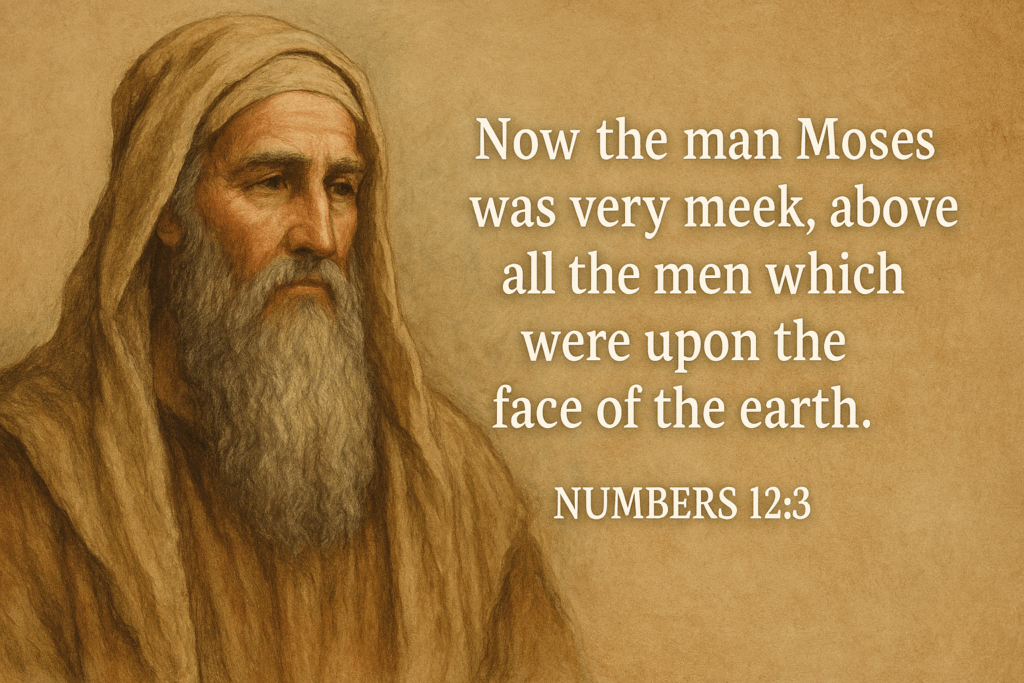
In a world that celebrates assertiveness, dominance, and standing your ground at all costs, the biblical concept of meekness seems almost countercultural—perhaps even weak. Yet when we examine Scripture carefully, we discover that meekness is anything but weakness. It’s a powerful virtue that characterized some of the Bible’s greatest heroes and even Christ Himself.
Understanding Meekness
According to Noah Webster’s American Dictionary of the English Language, meekness is defined as “softness of temper, mildness, gentleness, forbearance under injuries and provocations.” It’s the ability to remain humble and gentle even when someone wrongs you or deliberately tries to provoke you. In evangelical terms, it means “humility, resignation, submission to the divine will without murmuring or peevishness.”
This quality stands in stark contrast to pride, arrogance, and a contentious spirit. Remarkably, Webster noted that meekness “is a grace which Jesus alone inculcated, and which no ancient philosopher seems to have understood or recommended.” While ancient Greek philosophers identified courage, wisdom, and justice as virtues, none of them recognized meekness, in the scriptural sense, as something to be pursued. This virtue is uniquely Christian.
Moses: The Meekest Man on Earth
When we think of Moses, we typically picture the dramatic moments: the burning bush, confronting Pharaoh, parting the Red Sea, and receiving the Ten Commandments on Mount Sinai. These are the images of a powerful leader accomplishing extraordinary things.
Yet Numbers 12:3 contains a surprising parenthetical statement: “Now the man Moses was very meek, above all the men which were upon the face of the earth.” This verse appears in a context where Moses’ own siblings, Aaron and Miriam, were speaking against him and questioning his authority. God heard their complaints and called them to account.
Moses accomplished great things not because he was naturally assertive or domineering, but because God worked through a man who was fundamentally meek in character. Moses initially resisted God’s call, protesting that he wasn’t eloquent enough. He was the right temperament for God to use powerfully.
Yet even Moses had his breaking points. After forty years of leading complaining Israelites through the wilderness, he finally lost his temper. In Numbers 20, when the people again complained about a lack of water, God told Moses to speak to a rock. Instead, in his frustration, Moses struck the rock twice, calling the people rebels. Water still flowed, demonstrating God’s grace to the people, but Moses’s disobedience cost him the privilege of entering the Promised Land.
This shows us something important: even the meekest person on earth struggled with anger and frustration. Meekness doesn’t mean you’ll never feel provoked—it means you forbear under provocation without sinning.
The Meekness of Christ
Jesus described Himself as “meek and lowly in heart” (Matthew 11:29). When He entered Jerusalem for His triumphal entry, He came riding on a donkey—a picture of meekness, not military might. In 2 Corinthians 10:1, Paul appeals to believers “by the meekness and gentleness of Christ.”
Three times in the New Testament, Christ is explicitly described as meek. Interestingly, while God the Son is frequently associated with meekness, God the Father is rarely described this way in Scripture. Meekness appears to be a quality particularly emphasized in relation to the incarnate Christ and to human believers.
Meekness as Christian Character
Throughout Paul’s epistles, meekness appears repeatedly as a quality that should characterize members of the body of Christ:
Galatians 6:1 instructs us that when a fellow believer is overtaken in a fault, those who are spiritual should “restore such a one in the spirit of meekness, considering thyself, lest thou also be tempted.” The reason for meekness is self-awareness—recognizing that we could just as easily stumble.
Ephesians 4:2 calls believers to walk “with all lowliness and meekness, with longsuffering, forbearing one another in love.” Notice the connection between meekness and love—they work together.
Colossians 3:12 lists meekness among the characteristics of the new man that believers are to “put on”: “bowels of mercies, kindness, humbleness of mind, meekness, longsuffering.”
2 Timothy 2:24-25 provides crucial instruction for ministry: “The servant of the Lord must not strive; but be gentle unto all men, apt to teach, patient, in meekness instructing those that oppose themselves.” Even when dealing with those who oppose the truth, the approach should be meek instruction, recognizing that ultimately only God can grant repentance.
Titus 3:2 extends this even further, instructing believers to “speak evil of no man, to be no brawlers, but gentle, showing all meekness unto all men”—not just those who agree with us, but everyone.
Meekness in the Digital Age
These biblical principles have profound implications for how we engage with others, particularly in our modern context of social media. Online platforms often bring out the worst in people, allowing them to behave in ways they never would face-to-face. The anonymity and distance of digital communication can make us harsh, combative, and unmerciful.
Yet Scripture calls us to something different. We’re to avoid “foolish and unlearned questions” that “gender strifes” (2 Timothy 2:23). We’re to recognize that harsh confrontation rarely changes minds—”a man convinced against his will is of the same opinion still.”
This doesn’t mean we compromise truth or avoid clarity. It means we deliver truth with grace, recognizing that people who oppose sound doctrine are actually opposing themselves, and what they need is patient, meek instruction, not verbal combat.
The Practical Expression of Grace
Meekness is fundamentally other-regarding. It values and esteems the other person, recognizing their confusion and need for truth rather than condemnation. It’s a practical expression of grace and long-suffering.
Our flesh wants to fight, argue, prove itself right, and win debates. Meekness requires us to walk in the Spirit instead of the flesh. It requires moderation—not swinging to extremes but maintaining the balanced, temperate character that Scripture commends.
The blessed truth is this: “Blessed are the meek, for they shall inherit the earth” (Matthew 5:5). In God’s economy, meekness isn’t weakness—it’s the pathway to blessing and the evidence of spiritual maturity. May we cultivate this beautiful fruit of the Spirit in our daily lives.
Pastor Bryan Ross
Grace Life Bible Church
Grand Rapids, MI
Friday, November 7, 2025
Resources For Further Study
73) Galatians 5:23 The Fruit of the Spirit, Part 9 (Meekness)